


Who should Australians turn to for home loan advice, investment ideas and important financial decisions? An accountant is one option. A mortgage broker or financial adviser would also be a sensible choice.
But in recent years, that narrative has begun to shift. It started with a Google search. Now, a growing number of Australians are turning to ChatGPT, Copilot and other AI tools as their first stop for financial guidance.
In many ways, the shift makes sense. Information has never been more accessible, and getting answers takes only seconds. Within minutes, you can compare ideas, explore strategies and build a better understanding of the choices in front of you. But as AI becomes increasingly influential in financial decision-making, it’s important to remember that information is only part of the equation. The real challenge isn’t finding answers. It’s determining which answer is right for you.
Because financial decisions don’t happen in isolation. They happen in the middle of real life, family goals, career plans, lifestyle priorities and future opportunities all play a role in determining whether a decision that looks good on paper is actually the right move.
AI Financial Advice: good for information, but not genuine advice
Artificial intelligence is changing the way people research financial decisions. It can explain concepts in plain English, help people understand different loan features, outline the basics of refinancing and provide a general overview of strategies worth exploring.
For many people, that is a positive. Instead of walking into a conversation feeling completely unsure, they arrive with a better understanding of the language, options and questions they may want to ask.
But useful information is not the same as personalised Financial Advice. AI can help explain what something means, but it does not always understand what matters most in your situation. That difference becomes especially important when the decision you’re making is connected to a major life change.
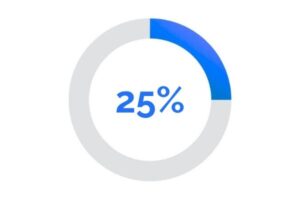
According to AustralianSuper research released in 2026 – Nearly 1 in 5 Australians (17%) are now using AI to inform financial decisions, rising to 28% of Australians aged 18-29, and 25% of those users have acted on AI-generated financial information without checking other sources.
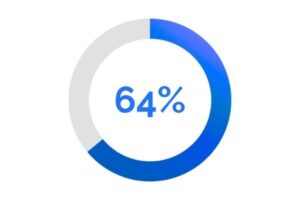
ASIC’s 2026 Gen Z Financial Behaviours Report found – 18% of Gen Z Australians use AI platforms for financial information and guidance, while 64% report trusting AI platforms for financial information and guidance.
Real Life Doesn’t Fit Into A Search Box
One of the most interesting things about AI is how quickly it provides answers. Ask a question and you’ll usually receive a thoughtful response in seconds. For straightforward questions, that is incredibly useful.
The challenge is, life is rarely straightforward.
Take a family living in the same home for ten years. The kids are getting older, the house is feeling smaller and they’re starting to think about what comes next. On the surface, the question seems simple. Should they renovate or should they move?
An AI tool can explain the benefits and drawbacks of both options. It can outline costs, risks and things to consider. What it can’t do is sit across the table and understand everything happening around that decision.
Maybe one parent is hoping to reduce their working hours in the coming years. Maybe school fees are on the horizon. Maybe the goal has always been to move closer to the coast. Maybe they’re carrying a level of financial stress they haven’t shared with anyone.
What starts as a property question quickly becomes a conversation about lifestyle, priorities and the future. That’s often what we see with clients. The question they ask first is rarely the whole story.

Good Decisions Look Beyond Today
Most people don’t wake up one morning and decide they need a new loan, a tax strategy or a financial plan.
More often, they’re responding to a life change. Maybe they’re thinking about buying their first home. Perhaps the family is growing and their current house no longer fits. Some are building a business and wondering how to turn today’s success into long-term security. Others are looking ahead and asking whether they’re on track for the retirement they’ve imagined.
What these situations have in common is that they feel important in the moment. The decision in front of you naturally becomes the focus. But life’s biggest financial decisions rarely affect just one area of your life. The choices you make today can influence future opportunities, lifestyle flexibility and long-term goals for years to come.
That’s why the most valuable conversations often aren’t about the decision itself. They’re about understanding where that decision fits within the bigger picture of the life you’re trying to create.
We’ve worked with clients who initially came to us looking for a loan, only to discover that the bigger opportunity was how that decision could support future investments. We’ve met families convinced they needed a larger home immediately, before realising their priorities were changing and another path made more sense.
The decisions that create the best long-term outcomes are rarely about solving today’s problem alone. They’re about creating flexibility and choice for the years ahead.
Most Financial Decisions Are Connected
One thing we’ve learned over the years is that money doesn’t fit neatly into boxes.
People often think they’re making a lending, accounting or investment decision. In reality, they’re usually making all three at the same time.
Consider someone seeking Home Loan Advice to renovate their home. On the surface, it may seem like a question about finance. How much will the project cost? What will the repayments look like? How should the loan be structured?
But behind that sits a much bigger picture. How will the renovation affect future plans? Should surplus cash be directed towards the project or used elsewhere? Are there tax considerations that should be discussed? Will this improve their long-term financial position or simply delay another goal that is more important?
The further you pull back, the more connected everything becomes.
That’s why we believe some of the best financial decisions happen when different perspectives work together, rather than looking at each issue in isolation.
A lending specialist may focus on structure and flexibility. An accountant may focus on tax outcomes. A financial adviser may focus on wealth creation and long-term goals. Each perspective is valuable, but the real benefit comes when those views are connected around the person, the family or the business at the centre of the decision.
Information Is Everywhere, Perspective Is Rare
There has never been a better time to access information. Anyone with a smartphone can research strategies, compare options and learn more about money than ever. That is a positive change and one that should be embraced.
The problem isn’t a lack of information. If anything, most people have the opposite problem.
They’re overwhelmed. They’re reading different opinions, hearing conflicting advice, watching videos, listening to podcasts and using AI Financial Advice, yet still feeling unsure about what they should actually do.
The people who walk through our doors are rarely looking for more information. They’re looking for confidence.
Confidence that buying their first home is the right move. Confidence that they can afford to upgrade. Confidence that their wealth-building strategy is taking them in the right direction. Confidence that the decisions they’re making today will support the life they want tomorrow.
Technology can help explain your options. What it can’t do is help you understand which option aligns with your goals, values and the future you’re trying to create. That’s where perspective matters.
Your Next Chapter Starts With A Real Conversation
The growing reliance on AI Financial Advice is understandable. Technology is fast, accessible and often extremely helpful when you’re trying to understand your options.
But when it comes to major life decisions, whether that’s seeking Home Loan Advice, building wealth, growing a business or planning for retirement, information alone rarely provides the complete answer.
Information can help you understand your options. Professional Financial Advice, from someone who truly recognises your situation, helps you understand which option is most appropriate for your circumstances.
Because you’re not just making a financial decision. You’re planning your next chapter.
And while AI, online research and search results can be a valuable starting point, they rarely understand the full context of your goals, priorities and circumstances.
If you’d like help exploring what that next chapter could look like, we’d love to have an initial conversation. No pressure, no jargon and no obligation. Just practical guidance to help you move forward with confidence.
If you’re after a Financial Adviser that will guide your investment years and wealth creation strategies, Finspective can help. Check out our Investing & Wealth Creation page for more information.
Any advice on this site is general nature only and has not been tailored to your personal objectives, financial situation and needs. Please seek personal advice prior to acting on this information. Any advice on this website has been prepared without taking account of your objectives, financial situation or needs. Because of that, before acting on the advice, you should consider its appropriateness to you, having regard to your objectives, financial situation or needs.